
Two-Tone Marble Floor Installation for Columbus, OH Kitchens and Entryways
- September 11, 2026
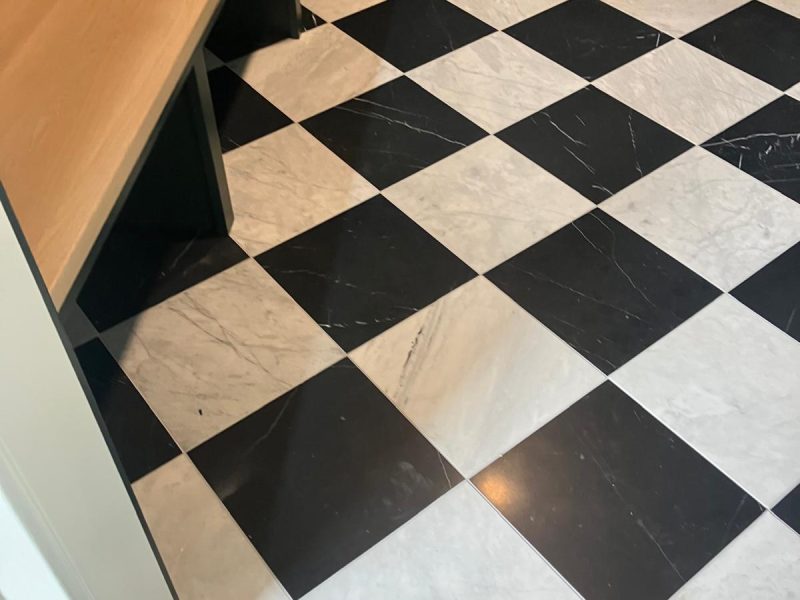
Some flooring choices blend into the background. A two-tone marble floor is not one of them. The combination of two contrasting marble varieties — most commonly a deep black stone paired with a crisp white — creates a floor that commands attention, anchors the room, and delivers a level of visual impact that no manufactured flooring material can replicate.
At Beltran Tiles LLC, we design and install two-tone marble floors for kitchens, entryways, and living spaces throughout Columbus, OH and the surrounding areas. It is one of the most detail-intensive installations we complete — and when it comes together correctly, one of the most striking results we deliver.
What Makes Two-Tone Marble Floors So Distinctive
The appeal of a two-tone marble floor goes beyond the contrast between colors. What makes it genuinely impressive is the combination of natural material variation and precise geometric pattern — a look that is simultaneously bold and refined.
- Natural stone veining — Each piece of marble carries its own unique veining. In a black and white installation, the white veining in the dark stone and the gray veining in the white stone create a surface with depth and movement that solid-color tile simply cannot achieve.
- Geometric precision — A checkerboard or diagonal two-tone layout requires exact tile sizing, consistent joint spacing, and perfectly aligned pattern centers. The geometry of the pattern is only as striking as the precision behind it.
- Polished finish — Two-tone marble installations are typically finished with a high polish that reflects light across the surface, making the contrast between the two stones even more pronounced and the room feel larger and brighter.
- Timeless design — Black and white marble floors have appeared in the finest homes and buildings for centuries. In a Columbus kitchen or entryway, the same combination reads as sophisticated and current rather than dated.
The Most Popular Two-Tone Marble Combinations
- Nero Marquina and Carrara White The most classic pairing in two-tone marble flooring. Nero Marquina is a deep black marble from Spain with distinctive white veining that runs across the surface in sharp contrast. Paired with Carrara white — a soft white Italian marble with subtle gray veining — the combination produces a floor that is bold in its contrast and refined in its detail.
- Black Marble and Thassos White For homeowners who want maximum contrast, Thassos white — a nearly pure white Greek marble with minimal veining — paired with a dark black marble creates the sharpest possible visual separation between the two tones.
- Dark Emperador and Cream Marfil A warmer alternative to the classic black and white palette. Dark Emperador brown marble paired with Cream Marfil produces a two-tone floor with a richer, earthier tone — a strong fit for kitchens and entryways with wood cabinetry and warm interior finishes.
Layout Options for Two-Tone Marble Floors
The pattern layout determines how the contrast between the two marble varieties reads across the floor — and it is one of the first decisions to make before installation planning begins.
- Diagonal Checkerboard The most common layout for two-tone marble floors. Tiles are set on a 45-degree diagonal so the alternating pattern runs corner to corner across the room. The diagonal orientation makes spaces feel larger and adds more visual movement than a straight layout.
- Straight Checkerboard Tiles are set square to the walls in an alternating pattern. Cleaner and more structured than the diagonal version — a strong fit for more formal spaces where a grid-based layout complements the architecture of the room.
- Large Format with Border Larger tiles in the primary marble variety fill the central field of the floor, framed by a contrasting border in the secondary marble. The border defines the perimeter of the room and gives the floor a tailored, intentional look — similar to the visual effect of a rug but built permanently into the surface.
- Diamond Inlay Pattern Individual diamond-shaped pieces of contrasting marble are set as inlays within a field of the primary stone — either at regular intervals or concentrated at the center of the room. More complex to install than a standard checkerboard, but delivers a result that functions as art underfoot.
What Goes Into Installing a Two-Tone Marble Floor Correctly
A two-tone marble installation is unforgiving of planning or execution errors. The geometry of the pattern makes every imprecision visible — a slightly off-center layout, an inconsistent joint width, or a tile cut that is even a few millimeters out of square will be noticeable across the entire floor.
- Pattern centering and dry layout Before any mortar goes down, the entire floor is measured and the pattern center is established. Every tile is dry-fit across the full installation area to confirm the layout works from every angle — particularly at walls, corners, and transitions where the pattern terminates. An off-center layout is one of the most common and most visible planning mistakes in a two-tone floor installation.
- Consistent tile sizing In a two-tone installation, both marble varieties need to be the same size to within a very tight tolerance. Natural stone can have slight size variation between pieces — calibrated marble, where each tile is cut to a precise dimension, is the right choice for this type of pattern work.
- White mortar As with all light marble installations, white polymer-modified mortar is required. Gray mortar bleeds through white and light-toned marble tiles and permanently alters their appearance — a mistake that cannot be corrected without removing and replacing the affected tiles.
- Precise cutting at borders and terminations Where the diagonal pattern meets the walls, each tile needs to be cut at exactly the right angle to produce a clean, even termination. These edge cuts are where the discipline of the installation is most visible — clean cuts read as intentional and precise; rough or uneven cuts draw the eye for the wrong reason.
- Grouting and sealing Grout color in a two-tone marble floor is a deliberate design choice. A light gray grout softens the contrast between the two stones; a white grout emphasizes the white marble; a dark grout makes the black marble appear to float. Once grouted and cured, both marble varieties and all grout joints are sealed with a penetrating stone sealer to protect the surface from staining, moisture, and everyday use in a kitchen or entryway environment.
Two-Tone Marble Floors in Columbus, OH Kitchens and Entryways
Kitchens and entryways are among the highest-traffic areas in a Columbus home — and also among the most visible. A two-tone marble floor in either space makes an impression every time someone walks through the door or into the kitchen, and it holds up to that traffic far better than softer flooring materials when it is installed and sealed correctly.
In a kitchen, the reflective surface of polished marble keeps the space feeling bright even in rooms with limited natural light. In an entryway, the pattern draws the eye inward and sets a tone for the rest of the home that no other flooring material quite matches.
Custom Two-Tone Marble Floor Installation in Columbus, OH
At Beltran Tiles LLC, every two-tone marble floor installation starts with careful layout planning and ends with a finished surface that reflects the precision behind it. We handle substrate preparation, pattern planning, mortar selection, precise installation, grouting, and sealing for homeowners throughout Columbus, OH and the surrounding areas.
Ready to install a two-tone marble floor in your Columbus, OH home?
Contact Beltran Tiles LLC today for a free consultation and estimate.
Share it :
Transform your home with expert craftsmanship
Upgrade your space with high-quality residential remodeling services in Columbus, OH. From tile installation to complete home improvements, Beltran Tiles LLC delivers precision, durability, and results you can trust.

Beltran Tiles LLC provides reliable residential remodeling services in Columbus, OH and surrounding areas. With over 23 years of experience, we deliver quality craftsmanship you can trust.
Contact
- Columbus, OH
- 40 Miles Of Coverage
- davidbeltran614@gmail.com
- info@beltrantiles.com
- (614) 517-6763
Info
- Monday to Saturday 8:00 AM - 6:00 PM
- By appointment only
- 24/7 Emergency Service
- +23 Years of Experience
- Residential Services Only
- Licensed & Insured
- Cash, Check & Zelle
- English and Spanish spoken