
Ceramic Tile Floor Installation Over Concrete Subfloor in Columbus, OH
- August 21, 2026
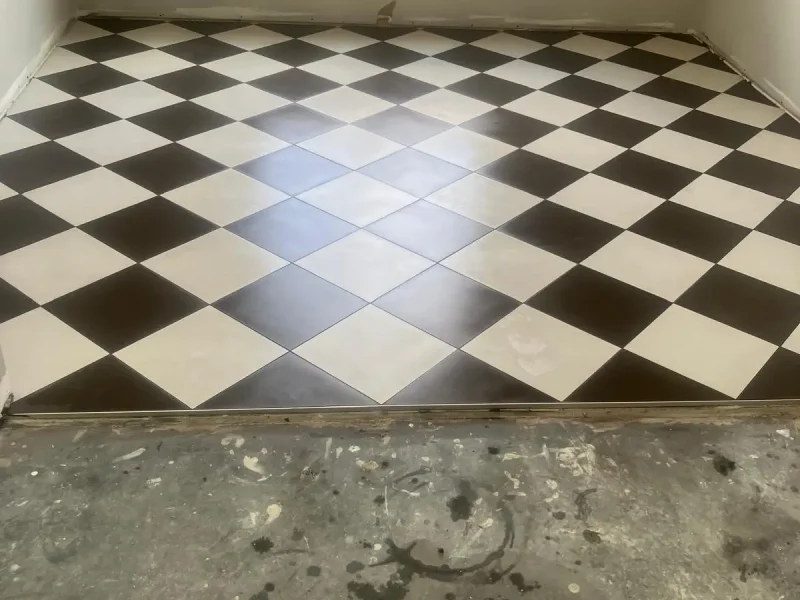
Concrete subfloors are one of the most common base surfaces found in Columbus homes — particularly in basements, main-level additions, and newer construction where a slab foundation is standard. And while concrete may seem like a straightforward surface to tile over, the reality is that a concrete subfloor requires careful assessment and preparation before any ceramic tile goes down.
Done correctly, a ceramic tile installation over concrete produces a floor that is exceptionally durable, easy to maintain, and built to handle decades of everyday use. Done without proper preparation, the same installation can develop cracks, loose tiles, and grout failure within a fraction of that time.
At Beltran Tiles LLC, we install ceramic tile over concrete subfloors for homeowners throughout Columbus, OH and the surrounding areas. Here is what the process involves and why each step matters.
Why Concrete Is Both an Ideal and Demanding Subfloor for Tile
Concrete has a lot going for it as a tile substrate — it is rigid, heavy, and does not flex the way a wood subfloor does. Tile needs a stable base that does not move, and concrete provides exactly that when it is in good condition.
The challenges come from concrete’s other characteristics:
- Moisture — Concrete is porous and can wick moisture up from the ground beneath it, especially in Columbus basements and slab-on-grade construction. Moisture that reaches the tile adhesive bond line causes tiles to loosen and grout to deteriorate over time.
- Cracks — Existing cracks in a concrete slab will telegraph through tile and grout if they are not addressed before installation. A crack that moves even slightly with seasonal temperature changes will crack the tile or grout joint directly above it.
- Surface levelness — Concrete slabs are rarely perfectly flat. Low spots, high spots, and uneven sections need to be corrected before tile is installed to prevent lippage — the condition where tile edges sit at different heights and create an uneven, unprofessional surface.
- Surface contamination — Paint, sealers, adhesive residue, and curing compounds left on a concrete slab prevent mortar from bonding properly to the surface.
Each of these factors has to be evaluated and addressed before a single tile goes down.
Step One: Moisture Testing
Moisture is the most common cause of ceramic tile failure over concrete, and it is also the easiest problem to overlook because it is not always visible on the surface. Before installation begins, the concrete slab needs to be tested for moisture vapor transmission.
- A simple plastic sheet test — taping a piece of plastic film to the slab for 24 to 48 hours and checking for condensation underneath — can reveal active moisture movement through the concrete
- In cases where moisture is present, a moisture barrier or waterproof membrane needs to be applied before tile mortar and tile are installed
- Installing tile directly over a moisture-active slab without a barrier will result in adhesive bond failure and eventual tile loosening — no matter how well the rest of the installation is done
Columbus’s climate, with its humid summers and freeze-thaw cycles, makes moisture assessment particularly important for any slab-level installation.
Step Two: Crack Evaluation and Repair
Not every crack in a concrete slab requires the same response — but every crack needs to be evaluated before tile goes over it.
- Dormant cracks — Cracks that are stable and show no signs of ongoing movement can be filled with a flexible crack isolation membrane or polymer-modified filler before tiling
- Active cracks — Cracks that continue to move with temperature or moisture changes require an uncoupling membrane installed over the entire slab to isolate the tile layer from movement in the concrete below
- Large or structural cracks — Significant cracking that suggests ongoing settlement or structural movement needs to be assessed and addressed at the source before any flooring work proceeds
Installing an uncoupling membrane over a concrete slab with any crack activity is one of the most reliable ways to protect a tile installation from future cracking — and it is a step we include on any project where the slab’s stability is in question.
Step Three: Surface Cleaning and Profile Preparation
Once moisture and cracks have been addressed, the concrete surface itself needs to be cleaned and prepared to accept mortar adhesion.
- All paint, sealers, adhesive residue, and curing compounds must be removed — either by grinding, scarifying, or chemical stripping depending on what is present
- The surface needs to have enough texture — or profile — for mortar to grip. A smooth, polished, or sealed concrete surface will not bond reliably without mechanical preparation to open up the surface
- Any oil stains or contamination need to be fully removed, as they prevent bonding even after grinding
- The slab should be vacuumed and cleaned thoroughly before mortar application begins
Step Four: Leveling the Slab
Ceramic tile requires a flat surface — not just a hard one. Low spots and high points across a concrete slab need to be corrected before tile is installed.
- High spots are ground down with a concrete grinder until they are flush with the surrounding surface
- Low spots are filled with a self-leveling underlayment or floor leveling compound, which is poured or troweled into the depression and allowed to cure before tiling begins
- The finished surface should meet the industry standard of no more than 3/16 of an inch variation over a 10-foot span before tile installation proceeds
Correcting levelness at this stage prevents lippage, cracked tile edges, and an uneven finished surface that becomes more noticeable over time as foot traffic wears the high points.
Step Five: Tile Installation
With the concrete properly prepared, tile installation can begin. For ceramic tile over a concrete subfloor, the installation process follows a precise sequence designed to maximize adhesion and produce a flat, even finished surface.
- A polymer-modified thinset mortar is applied to the prepared concrete using a notched trowel sized to the tile format being installed
- Large-format tiles require back-buttering — applying mortar to the back of the tile in addition to the floor — to ensure full coverage across the entire tile surface
- Tiles are set with consistent spacing using tile spacers to maintain even grout joints throughout the installation
- Each tile is checked for level and lippage as it is set, with adjustments made before the mortar begins to set
- The installation is allowed to cure for the manufacturer-specified period before grouting begins
The Finished Result: Durable, Low-Maintenance Ceramic Tile
Ceramic tile installed correctly over a properly prepared concrete subfloor is one of the most durable finished floors available for Columbus homes. It handles moisture, temperature changes, and heavy foot traffic without warping, fading, or wearing down the way softer flooring materials do. It is also one of the easiest surfaces to keep clean — an important consideration in high-traffic areas, mudrooms, kitchens, and basement living spaces.
The key is the preparation that happens before the tile ever goes down. A well-prepared concrete slab produces a tile installation that holds up for decades. A slab that was not properly assessed and corrected produces one that starts showing problems within the first few years.
Ceramic Tile Installation Services in Columbus, OH
At Beltran Tiles LLC, every ceramic tile installation over concrete starts with a thorough evaluation of the slab — moisture, cracks, levelness, and surface condition — before any preparation or installation work begins. We serve homeowners throughout Columbus, OH and the surrounding areas with ceramic, marble, and glass tile installation built to last.
Ready to start your tile project the right way? Contact Beltran Tiles LLC today for a free consultation and estimate.
Share it :
Transform your home with expert craftsmanship
Upgrade your space with high-quality residential remodeling services in Columbus, OH. From tile installation to complete home improvements, Beltran Tiles LLC delivers precision, durability, and results you can trust.

Beltran Tiles LLC provides reliable residential remodeling services in Columbus, OH and surrounding areas. With over 23 years of experience, we deliver quality craftsmanship you can trust.
Contact
- Columbus, OH
- 40 Miles Of Coverage
- davidbeltran614@gmail.com
- info@beltrantiles.com
- (614) 517-6763
Info
- Monday to Saturday 8:00 AM - 6:00 PM
- By appointment only
- 24/7 Emergency Service
- +23 Years of Experience
- Residential Services Only
- Licensed & Insured
- Cash, Check & Zelle
- English and Spanish spoken